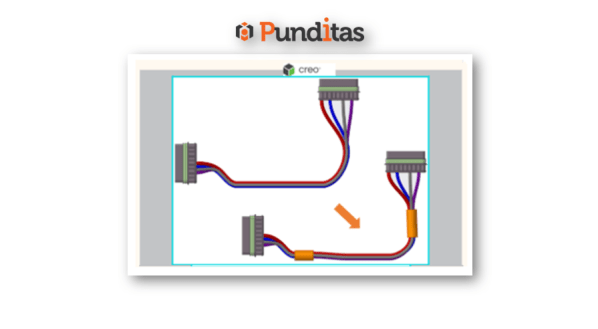
A new Stiff Shrink feature has been added to Cabling with Creo 8.0. The Stiff Shrink sheath feature allows you to route multiple cables and wires through it. Unlike the Bundle feature, the Stiff Shrink feature does not bend and remains straight along its axis. You can first create a Stiff Shrink feature by using... Continue Reading →
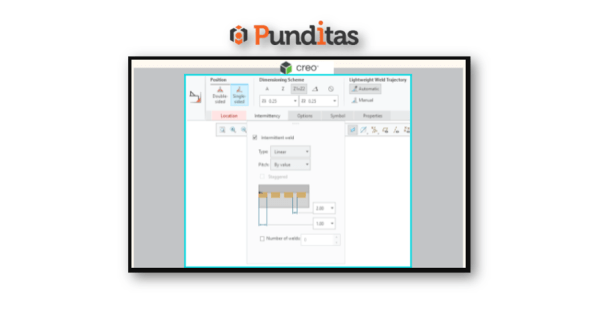
Did you know about the new Dimensioning Scheme group for groove/butt welds in PTC Creo?
The Fillet Weld dashboard has been updated with Creo 8.0. A new Dimensioning Scheme group has been created for groove/butt welds. The dashboard contains the following groups: PositionTypeEdge PreparationWeld Size SchemeLightweight Weld Trajectory User Interface: Click Applications > Welding Punditas AI Advisor for Creo Punditas AI Advisor provides real-time guidance as you work in the Creo environment. Information on “how to use”... Continue Reading →
Punditas AI Advisor now supports Creo 7.0.5.0
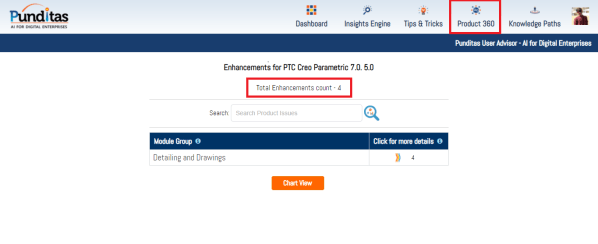
PTC released Creo 7.0.5.0 recently. Punditas AI Advisor now supports this latest version of Creo 7.0.5.0. Punditas AI allows users to learn more about “How”, What” and “Why” of these enhancements through Product 360 module. The picture below shows the Module groups and the corresponding enhancements added within each group. To try this out, please... Continue Reading →
Punditas AI Advisor now supports Creo 8.0.1.0
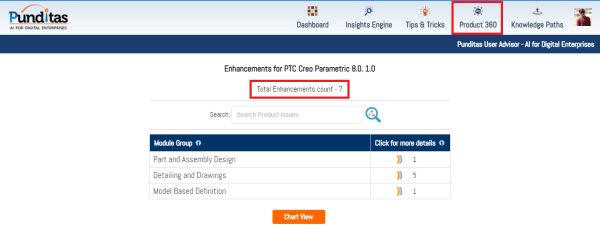
PTC released Creo 8.0.1.0 recently. Punditas AI Advisor now supports this latest version of Creo 8.0.1.0. Punditas AI allows users to learn more about “How”, What” and “Why” of these enhancements through Product 360 module. The picture below shows the Module groups and the corresponding enhancements added within each group. To try this out, please... Continue Reading →
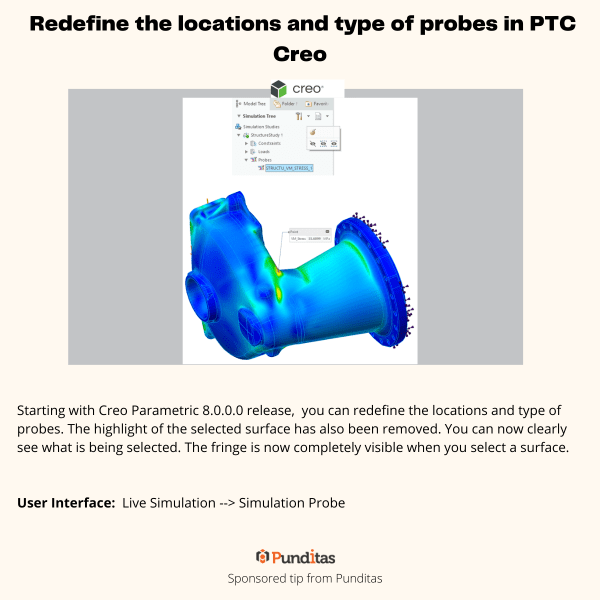
Redefine the locations and type of probes in PTC Creo
Starting with Creo Parametric 8.0.0.0 release, you can redefine the locations and type of probes. The highlight of the selected surface has also been removed. You can now clearly see what is being selected. The fringe is now completely visible when you select a surface. User Interface: Live Simulation --> Simulation Probe For more information about Punditas... Continue Reading →
Selective Removal of Dangling Beams in PTC Creo
This Improvement allows one to control which surfaces should be used to remove the dangling beams. Eliminating the old on/off approach, this enhancement provides a more flexible way to remove dangling beams and a better control over the lattice creation. User Interface: Lattice --> Cell Fill --> Dangling beams --> Keep/Remove/Remove by surfaces For more... Continue Reading →
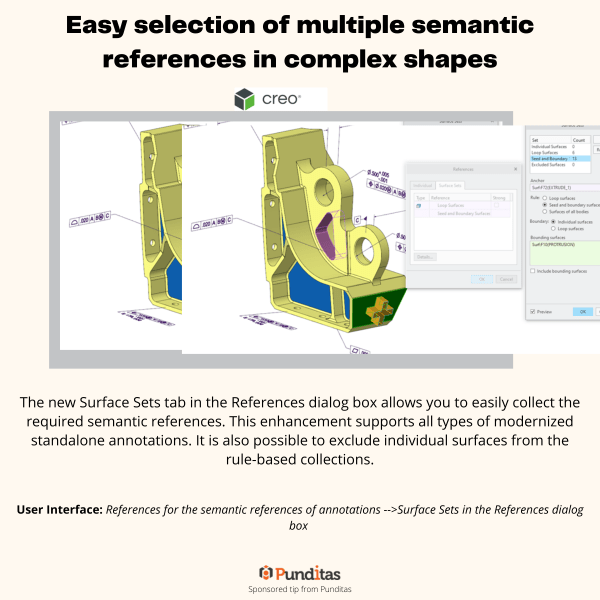
Easy selection of multiple semantic references in complex shapes
The new Surface Sets tab in the References dialog box allows you to easily collect the required semantic references. This enhancement supports all types of modernized standalone annotations. It is also possible to exclude individual surfaces from the rule-based collections. User Interface: References for the semantic references of annotations -->Surface Sets in the References dialog... Continue Reading →
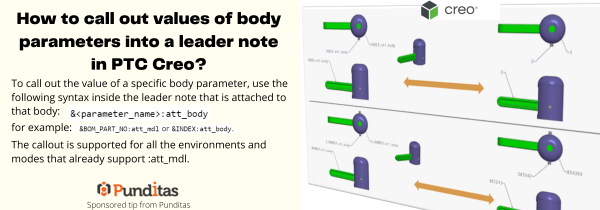
How to call out values of body parameters into a leader note in PTC Creo?
To call out the value of a specific body parameter, use the following syntax inside the leader note that is attached to that body: &<parameter_name>:att_body for example: &BOM_PART_NO: att_mdl or &INDEX: att_body The callout is supported for all the environments and modes that already support :att_mdl. ptccreo.punditas.com
How to easily add Standard text symbols in PTC Creo?
With Creo 8.0, text symbol pallet is easily accessible for datum feature symbol (DFS) annotations. This allows you to add standard text symbols to a datum feature symbol annotations UI: Annotate -> Datum Feature Symbol ->place DFS -> Select DFS-> activate text field ->Symbols ptccreo.punditas.com
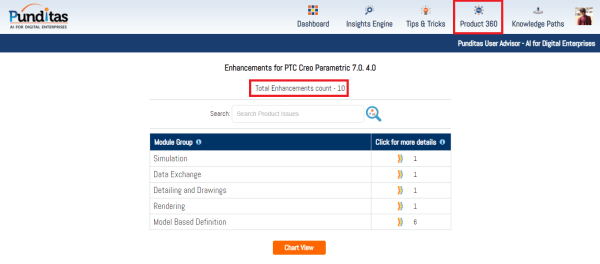
Punditas AI Advisor now supports Creo 7.0.4.0
PTC released Creo 7.0.4.0 recently. Punditas AI Advisor now supports this latest version of Creo 7.0.4.0 . Punditas AI allows users to learn more about “How”, What” and “Why” of these enhancements through Product 360 module. The picture below shows the Module groups and the corresponding enhancements added within each group. To try this out,... Continue Reading →